Elizabeth Taylor Greenfield
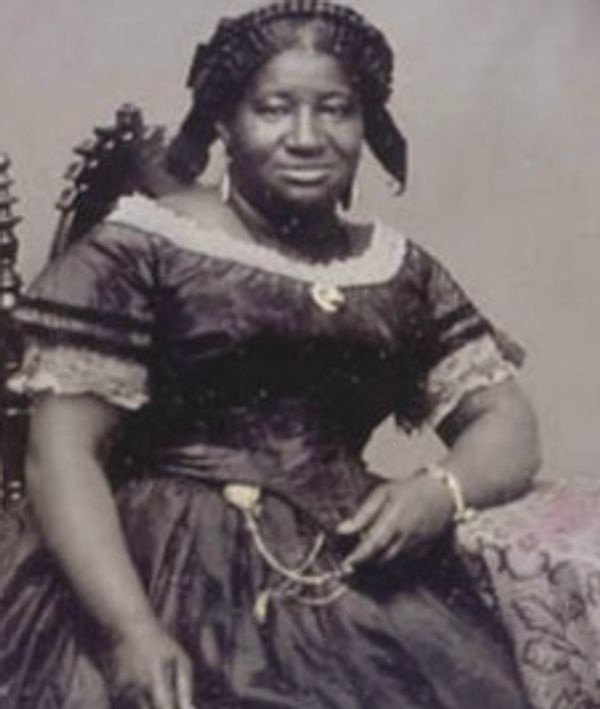
Elizabeth Taylor Greenfield
Elizabeth Taylor Greenfield was a pioneering 19th‑century African American concert and opera singer, widely known as “The Black Swan” and regarded as the first Black singer to gain major classical‑music fame in the U.S. and Europe.
Early life
Elizabeth Taylor Greenfield was born into slavery in Natchez, Mississippi, around 1817–1820, and was taken as a child to Philadelphia by her enslaver, who later became a Quaker and freed the people she held in bondage. Greenfield chose to remain with this family, took the surname Greenfield, and, with encouragement, began developing her musical talent despite racist restrictions of the time.
Greenfield began performing at private parties and gave her first public concerts in Buffalo, New York, in 1851, followed by a national tour through northern cities such as Boston and Chicago. Critics marveled at her unusually wide vocal range and powerful tone, and admirers dubbed her “The Black Swan,” echoing European stars like Jenny Lind (“The Swedish Nightingale”).
Career and “The Black Swan”
Greenfield started performing at private parties and gave her first public concerts in Buffalo, New York, in 1851, followed by a national tour through northern cities like Boston and Chicago. Critics marveled at her unusually wide vocal range and powerful tone, and admirers dubbed her “The Black Swan,” echoing European stars like Jenny Lind (“The Swedish Nightingale”).
International acclaim
In 1853–1854, Greenfield toured Britain and Ireland, aided by influential patrons including Harriet Beecher Stowe and aristocratic supporters. On May 10, 1854, she sang at Buckingham Palace for Queen Victoria, becoming the first known Black performer to appear before British royalty.
Teaching and later life
After returning to the United States, Greenfield settled in Philadelphia, where she taught voice, directed a church choir, and helped organize the Black Swan Opera Troupe to promote Black classical singers. She died in Philadelphia on March 31, 1876, remembered as the best‑known Black concert artist of her era.
Legacy in Black history
Greenfield’s success challenged racist beliefs about Black musical ability and opened doors for later stars such as Sissieretta Jones and Camilla Williams. In 1921, the first major Black‑owned record label, Black Swan Records, was named iafter honorher, cementing her influence on American music history.
Greenfield’s success challenged racist beliefs about Black musical ability and opened doors for later stars such as Sissieretta Jones and Camilla Williams. In 1921, the first major Black‑owned record label, Black Swan Records, was established in her, cementing her influence on American music history.

Shirley Ms. Shirley Raines black history
Ms. Shirley Raines is being honored in Black History for her work as a Black community advocate who brought dignity, beauty, and basic care to unhoused people, especially on Skid Row in Los Angeles and in parts of Nevada.essence+3[youtube]
Who Ms. Shirley Raines Was
Shirley Raines was a Black community activist, self‑taught beautician, and nonprofit founder from Compton, California, known to many simply as “Ms. Shirley.” She died at age 58 after years of grassroots work with people experiencing homelessness in Los Angeles, San Diego, and Nevada.afro+4
Beauty 2 The Streetz
Ms. Shirley built a social media following of about 6 million across Instagram and TikTok, using those platforms to highlight the humanity of people living on the streets and the realities of the housing crisis. She was named CNN “Hero of the Year” in 2021 and received a 2025 NAACP Image Award for Outstanding Social Media Personality. Wikipedia+2p them see themselves as mtheir ore than homelessness, even if it doesn’t directly solve housing.latimes+3
Recognition and Awards
Ms. Shirley built a social media following of about 6 million across Instagram and TikTok, using those platforms to highlight the humanity of people living on the streets and the realities of the housing crisis. She was named CNN “Hero of the Year” in 2021 and received a 2025 NAACP Image Award for Outstanding Social Media Personality.wikipedia+2
Why She Matters in Black History
Raines’ story is now being lifted up during Black History Month as an example of modern Black leadership, mutual aid, and community care. Her life connects Black women’s activism, grief turned into service (after the loss of her son), and a reimagining of how society sees and treats unhoused people, especially in predominantly Black and brown communities.abc7chicago+4[youtube]
Reginald Dwayne Betts
an influential American poet
Reginald Dwayne Betts is an influential American poet, educator, legal scholar, and advocate for ]prison reform. His life story reflects a journey from adversity to artistic and academic achievement:
Early Life and Incarceration
- Born: 1980 in Maryland.
- At the age of 16, he was involved in an armed carjacking, a crime that led to him being prosecuted as an adult and sentenced to nine years in prison.
Turning Point
- During his time in prison, Betts discovered a passion for literature. He began reading extensively and started writing poetry, using it as a means of expression and personal reflection.
Education
- After his release, Betts pursued higher education:
- University of Maryland: Graduated in 2009.
- Warren Wilson College: Earned an MFA in 2010.
Career and Advocacy
- Betts has become a prominent voice in discussions about the criminal justice system and the importance of rehabilitation through education and the arts.
- He teaches creative writing and often speaks on issues related to incarceration, particularly as they pertain to youth.
Awards and Recognition
- Betts received the NAACP Image Award for Outstanding Literary Work in Poetry, reflecting his impact in the literary world and his commitment to social justice.
Literary Contributions
- He has published several collections of poetry that draw on his personal experiences and the broader themes of identity, struggle, and redemption.
Betts's journey not only highlights the transformative power of education and the arts but also emphasizes the potential for rehabilitation and positive change within the criminal justice system. His work continues to inspire others, advocating for a more humane and just approach to incarceration.
CLAUDETTE COLVIN

pivotal figure in the civil rights movement
Claudette Colvin was a pivotal figure in the civil rights movement. At age 15, she refused to give up her bus seat to a white passenger in Montgomery, Alabama, nine months before Rosa Parks' similar act.
Early Defiance
On March 2, 1955, Colvin, a high school student, sat in the "colored" section of a segregated bus but refused to move when ordered by the driver as the white section filled up. Police arrested her, charging her with disturbing the peace, disobeying the law, and assaulting an officer; officers made inappropriate sexual comments during her transport. Influenced by NAACP youth discussions and the recent execution of her friend Jeremiah Reeves on dubious charges, she drew inspiration from figures like Sojourner Truth and Harriet Tubman to stay seated.
Why Overlooked
Civil rights leaders, including the NAACP, chose not to rally around Colvin for a boycott, citing her youth, darker skin, working-class background, and later pregnancy (though not at the time of arrest), preferring Rosa Parks as a more "respectable" symbol. Her act still sparked community outrage and moral courage for the Montgomery Bus Boycott led by Martin Luther King Jr.
Legal Impact
Colvin became one of four plaintiffs in the 1956 Browder v. Gayle federal lawsuit, which challenged bus segregation as unconstitutional; the U.S. Supreme Court upheld the ruling, ending segregated buses nationwide.
Later Life and Death
Facing ostracism, she moved to New York City in 1958, raised her son as a single mother, and worked 30 years as a nurse's aide while staying mostly silent about her role until later interviews. Colvin died on January 13, 2026, at age 86 in Texas under hospice care.
Robert Sengstacke Abbott

Robert Sengstacke Abbott was an American lawyer, newspaper publisher, and editor best known for founding The Chicago Defender in 1905. Born around 1868–1870 in Georgia to formerly enslaved parents, he became one of the first self-made African American millionaires through the paper's success.aaas.umd+3
Early Life
Abbott studied printing at Hampton Institute and earned a law degree from Kent College of Law in Chicago in 1898, but racial barriers prevented him from practicing law effectively. Raised by his mother and stepfather, a Congregationalist minister, he developed a passion for education and journalism early on.wikipedia+2
Chicago Defender
He launched The Chicago Defender with a 25-cent investment, turning it into the nation's largest Black-owned newspaper by circulation, dubbed "America's Black Newspaper." The paper aggressively covered racial injustice, lynching, and Jim Crow laws while promoting job opportunities and social justice in the North.britannica+3
Great Migration Role
Abbott studied printing at Hampton Institute and earned a law degree from Kent College of Law in Chicago in 1898, but racial barriers prevented him from practicing law effectively. Raised by his mother and stepfather, a Congregationalist minister, he developed a passion for education and journalism.
Legacy
He founded the Bud Billiken Parade in 1929, now a major Chicago event celebrating Black youth and culture. Abbott died on February 29, 1940, leaving the paper to his nephew; his work shaped Black media and civil rights.georgiaencyclopedia+2
Shirley Chisholm
Ms. Chisholm kicked the door in for African American women holding major roles in government. She first served as an educational consultant for New York City’s Bureau of Child Welfare and ran for the New York State Assembly in 1964. Chisholm was elected in 1968 as the first African American congresswoman. She served from 1969 to 1983, representing New York’s 12th District. She later became one of the founding members of the Congressional Black Caucus. Chisholm made more history in 1972 by becoming the first African American woman of a major political party to run for the Democratic Party’s presidential nomination. Her campaign slogan: “Unbought and Unbossed.” Vice President Kamala Harris even paid tribute to Chisholm in her presidential campaign announcement by using a similar logo to Chisholm’s.
Early Life and Education
- Born: November 30, 1924, in Brooklyn, New York.
- Chisholm was the daughter of immigrant parents from Barbados. Her early life was marked by the challenges of racial and economic inequality.
- She attended Brooklyn College, where she earned a Bachelor's degree in Sociology and graduated cum laude. She later earned a Master's degree in Elementary Education from Columbia University.
Political Career
- State Assembly: Chisholm was elected to the New York State Assembly in 1964, where she served until 1968. She became known for her advocacy work in education and social services.
- U.S. Congress: In 1968, she made history by becoming the first African American woman elected to the United States Congress. She served until 1983 and was known for her bold and unapologetic stance on various issues.
Presidential Campaign
- In 1972, Chisholm became the first African American woman to run for the Democratic nomination for President of the United States. Her campaign focused on equality, social justice, and addressing issues affecting marginalized communities.
Advocacy and Legacy
- Throughout her career, Chisholm championed numerous causes, including education reform, health care access, and anti-poverty measures.
- She co-founded the Congressional Black Caucus and served on several important committees during her time in Congress.
Awards and Honors
- Chisholm received multiple accolades for her contributions to politics and civil rights, including induction into the National Women's Hall of Fame and the Brooklyn Walk of Fame.
- In 2015, President Barack Obama posthumously awarded her the Presidential Medal of Freedom.
Later Life and Death
- After retiring from Congress, Chisholm continued to advocate for social justice and education until she passed away on January 1, 2021.
Shirley Chisholm's legacy as a pioneering figure in American politics and civil rights continues to inspire generations, highlighting the importance of representation and the fight for social justice.
Dorothy Height
called the matriarch of the Civil Rights Movement
Ms. Height has been called the matriarch of the Civil Rights Movement and often worked behind the scenes. After receiving two degrees from New York University in the 1930s, Height worked for the New York City Welfare Department and then became the assistant executive director of the Harlem Y.M.C.A. She was involved in anti-lynching protests, brought public attention to the exploitation of African-American women working in “slave markets” and escorted First Lady Eleanor Roosevelt to the National
Council of Negro Women, a council she served on for more than 40 years.
In the 1950s, she lobbied President Dwight D. Eisenhower to take an aggressive stance on school desegregation issues. Height also worked with Martin Luther King Jr., and she stood on the platform with him when he delivered his famous “I Have a Dream” speech in August 1963.
Alice Coachman
first African American woman from any country to win an Olympic Gold Medal
Alice Coachman became the first African American woman from any country to win an Olympic Gold Medal at the 1948 Summer Olympics in London. She set the record for the high jump at the Olympics, leaping to 5 feet and 6 ⅛ inches. Four years later, she became the first Black female athlete to endorse an international consumer product when she signed on as a Coca-Cola spokesperson. Over the course of her career, she won 34 national titles. She was officially inducted into the National Track-and-Field Hall of Fame in 1975 and the U.S. Olympic Hall of Fame in 2004.
Alice Coachman was a pioneering American athlete, best known for her achievements in track and field. Here are some key highlights of her life and career:
Early Life
- Born: November 9, 1923, in Albany, Georgia.
- Growing up in the segregated South, Coachman faced significant challenges, but her talent in athletics shone through from a young age.
Athletic Career
- High School: She excelled in track and field during her years at the local high school, where she won multiple championships.
- College: Coachman attended Florida Agricultural and Mechanical University (FAMU), where she continued to break records and receive recognition for her athletic prowess.
Olympics and Achievements
- 1948 Summer Olympics: Alice Coachman made history by becoming the first African American woman to win an Olympic gold medal. She won the gold in the high jump with a leap of 5 feet 6 inches.
- Her victory was especially significant in the context of the racial segregation and discrimination prevalent at the time
Legacy and Impact
- Coachman broke numerous records during her career and became a role model for future generations of athletes, particularly women and African Americans in sports.
- In recognition of her contributions, Coachman was inducted into several halls of fame, including the National Track and Field Hall of Fame.
Later Life
- After her athletic career, Coachman worked as a coach and an educator, imparting her knowledge and passion for sports to young athletes.
- She continued to inspire others until her passing on July 14, 2021.
Alice Coachman's achievements not only established her as a trailblazer in athletics but also contributed to the broader movement for civil rights and gender equality in sports. Her legacy remains a testament to perseverance and excellence.
Ethel Waters
the first to integrate Broadway
Ethel Waters first entered the entertainment business in the 1920s as a blues singer before making history. Waters was the first to integrate Broadway, appearing in Irving Berlin’s As Thousands Cheer, and eventually became the highest-paid performer on Broadway. In addition to becoming the first African American to star in her own television variety show in 1939, The Ethel Waters Show., she was nominated for an Academy Award for Best Supporting Actress for the film Pinky in 1950.
Also in 1950, Waters was the first Black actress to star in a television series,Beulah, which aired on ABC. In 1962, she became the first African American woman to be nominated for a Primetime Emmy Award for Outstanding Single Performance by a Leading Lady for the show Route 66.
Ruby Bridges
first African American child to desegregate An All white school
Ruby Bridges was the first African American child to desegregate the all-white William Frantz Elementary School in Louisiana during the New Orleans school desegregation crisis on November 14, 1960. She was six years old at the time. Despite intimidation and discrimination, Bridges never missed a day of school.
Bridges has written two books on her experience and has been honored with the Carter G. Woodson Book Award. Bridges is also a lifelong activist for racial equality. In 1999, Ruby established The Ruby Bridges Foundation to promote tolerance and create change through education. In 2000, she was made an honorary deputy marshal in a ceremony in Washington, DC.
Mae Jemison
first African American woman who orbited into space aboard the shuttle Endeavour in 1992
Mae Jemison was the first African American woman who orbited into space aboard the shuttle Endeavour in 1992. The team completed 127 orbits around Earth over eight days. Jemison is also a physician, teacher, a Peace Corps volunteer and president of a tech company, the Jemison Group. She continues to work towards the advancement of young women of color getting more involved in technology, engineering and math careers.
Dr. Patricia Bath ophthalmologist inventor & advocate

Dr. Patricia Bath was an influential American ophthalmologist, inventor, and advocate for the advancement of eye care and health equity. Here are some key highlights of her life and career:
Early Life and Education
- Born: November 4, 1942, in Harlem, New York City.
- Bath showed an early interest in science, inspired by her experiences with loss of vision in family members.
- Education: She attended Hunter College and later received her medical degree from Howard University College of Medicine.
Career
- Dr. Bath became the first African American woman to complete a residency in ophthalmology in the United States.
- She served as a faculty member at the University of California, Los Angeles (UCLA), and contributed to various community health initiatives.
Inventions and Innovations
- Dr. Bath is best known for inventing the Cataract Laserphaco Probe, a device that revolutionized cataract surgery by allowing for less invasive procedures. This invention significantly improved recovery times and outcomes for patients.
Advocacy for Health Equity
- Throughout her career, Dr. Bath focused on eliminating disparities in healthcare access and treatment, particularly for underserved populations.
- She founded the American Institute for the Prevention of Blindness, advocating for preventative measures in eye care.
Awards and Honors
- Dr. Bath received numerous awards and honors throughout her career, recognizing her contributions to medicine and her efforts to advance equity in healthcare.
- She was inducted into the National Women’s Hall of Fame and received accolades from various medical associations.
Legacy
- Patricia Bath's work not only advanced ophthalmology but also emphasized the importance of diversity and inclusion in healthcare fields.
- She continued to inspire future generations of medical professionals until her passing on May 30, 2022.
Dr. Bath's legacy lives on through her contributions to medicine, her advocacy efforts, and her impact on countless lives.